
The Flock Learns to Read Human Power
Three Bags FullEncounters with villagers, a butcher, and two shepherds expose how humans use fear, institutions, and appearances to control others.
increasing Bearing strength in each event
 decreasing
Bearing strength in each eventdecreasingHumans as a Herd
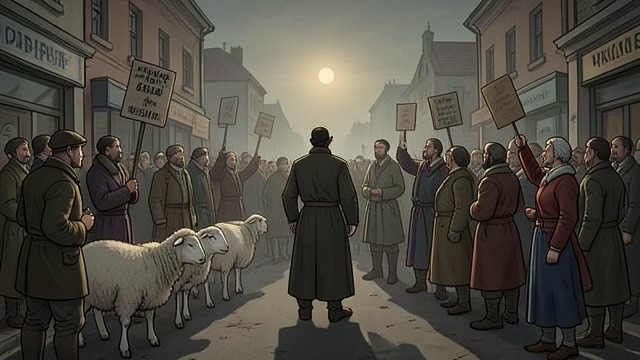
Humans as a Herd
A crowd arrives
The sheep watch villagers gather, gossip, and repeat rumors around George’s body. The people resemble a flock even though they believe themselves to be acting as individuals.
A useful comparison
Rebecca later calls humans herd animals, giving Miss Maple language for what she has observed. The parallel helps the sheep see that human group behavior has recognizable patterns.
The Butcher’s Reputation
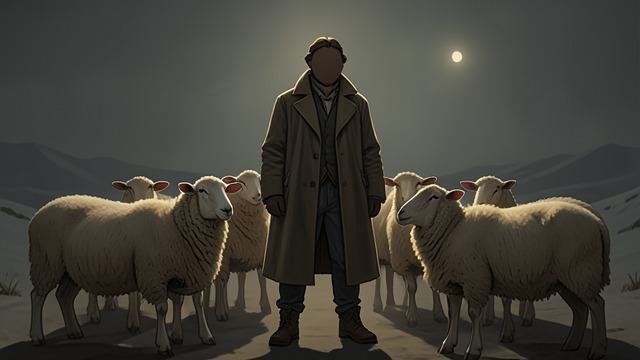
The Butcher’s Reputation
A frightening appearance
The sheep associate Ham with slaughter and blood, and initially assume that his strength makes him dangerous in every situation. His presence affects the flock before they know his motives.
A more complicated man
Ham’s fear of the sheep and his later regret complicate the image of an unfeeling butcher. The flock’s first impressions prove powerful but incomplete.
Gabriel’s Charm and Control
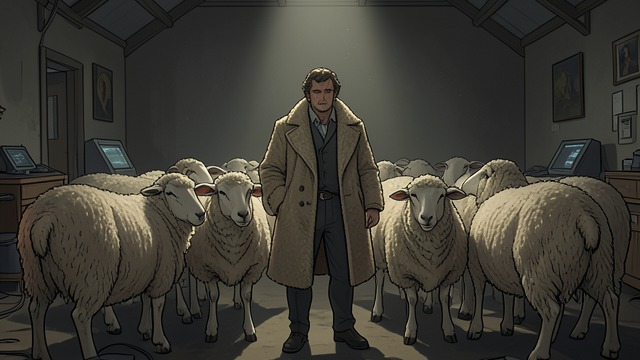
Gabriel’s Charm and Control
Trust built through manner
Gabriel’s quiet confidence and animal-handling skills attract the sheep. His appearance suggests a shepherd who understands them.
The disguise fails
He fences his sheep and feeds them for slaughter, while hiding his own motives beneath tobacco and wool. The flock learns to judge actions as carefully as appearances.
Institutions and Inaction
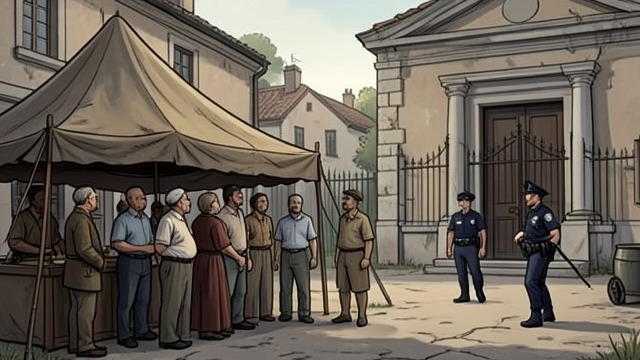
Institutions and Inaction
Law at a distance
The villagers wait for George’s will while the police investigation makes little progress. The formal reading creates an orderly setting for people whose private fears remain unresolved.
Power outside the law
The old McCarthy case and the later recording suggest that important evidence has been controlled by private interests. The sheep observe that institutions do not automatically produce justice.
Watching the Watchers
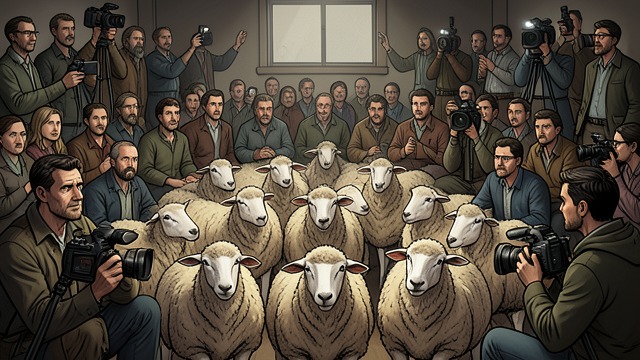
Watching the Watchers
Sheep become spectacle
The humans applaud, photograph, and judge the sheep at the contest. Their attention is intense but initially treats the animals as entertainment.
The gaze turns back
The flock uses the audience’s fascination to present evidence and disrupt the contest. The scene reverses the usual power of human observation, though communication remains difficult.
After the village gathers to view George’s body
During the flock’s first observations of Ham
During Gabriel’s first days at the pasture
During the village’s gathering at the lime tree
At the contest after the flock’s entrance
